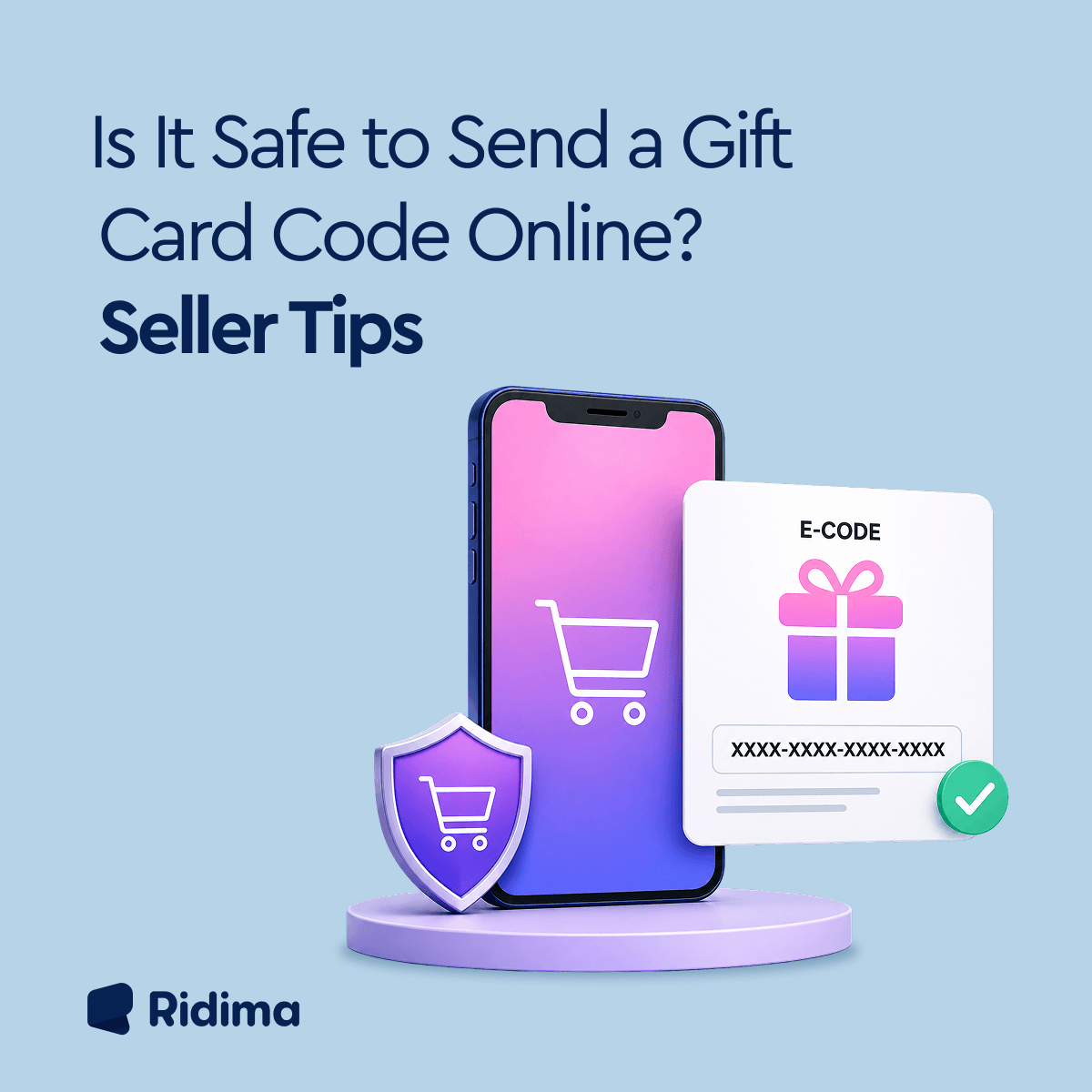
Have you ever held a gift card code in one hand and your phone in the other but unsure whether to hit “send”? Did a buyer promise you a great rate, and a small voice asked, “What if they disappear?” Have you asked, ” Is it safe to send a gift card code online?”
That voice deserves your attention. A gift card code works like cash, and once it leaves your hands, you can’t call it back. Scammers know this, which is why gift cards stay one of their favourite tools. In 2024 alone, the US Federal Trade Commission received more than 41,000 fraud reports involving gift and prepaid cards, with about $212 million in reported losses.
So, is it safe to send a gift card code online? Yes, but only when you send it to the right place. This guide shows you exactly where that is, the five scams that target sellers, and the simple checks that keep your money safe.
Quick answer
Sending a gift card code online is safe when you submit it through a verified trading platform that shows you the rate first and pays you after checking the card. It’s risky when you send the code to a stranger on WhatsApp, Instagram, Telegram, or any chat, because nothing stops that person from using the code and vanishing.
Why Your Gift Card Code Is Like Cash
A gift card has two parts: the physical card or email, and the code. Only the code matters. Whoever enters it first gets the balance, and the card company has no way of knowing who the “real” owner was.
That’s why the US Federal Trade Commission warns that only scammers tell you to buy a gift card to pay them. Once someone redeems a code, the money usually can’t come back.
For you as a seller, this means one thing: the moment you share your code is the moment you hand over the money. Every safety step in this guide protects that moment.
Safe vs Risky: Where You Can Send Your Code
Not every way of sending a code carries the same risk. Here is how the common options compare:
| Where you send the code | Risk level | Why |
| A verified trading app or website, through its official upload page. | Low | The platform shows the rate, checks the card, and pays into your account. |
| A friend or family member you’re gifting. | Low | You know them, and you aren’t expecting payment. |
| A “vendor” or “buyer” on WhatsApp, Telegram, or Instagram. | High | Nothing guarantees payment, and they can block you after redeeming. |
| A “middleman” or “escrow agent” you met online. | High | Fake escrow is a common scam. |
| Someone who claims to be platform “support” in your DMs. | Very high | Real support teams never ask for your code in a private chat. |
The pattern is simple. Send your code to a system, not a person.
5 Scams That Target Gift Card Sellers
Scammers don’t only target people who buy gift cards. They target sellers too. A guide from Naija Tech Guide lists the tricks that catch Nigerian traders most often:
- The WhatsApp “high rate” buyer
A buyer posts a rate far above the market. They ask for your card details first and promise to pay “in a minute.” Some even pay for one or two small cards to win your trust before they disappear with a big one.
- Fake escrow or middleman
Someone offers to “hold” your card until the buyer pays. It sounds fair, but the middleman works with the buyer, or is the buyer. Once you send the code, both vanish.
- The overpayment trick
A buyer claims they sent too much money and asks you to refund the difference. The original payment turns out to be fake or reversed, so you lose both your card and the refund.
- Fake proof of payment
The buyer sends a screenshot of a transfer or a fake bank alert and pushes you to send the code at once. The money never actually lands in your account.
- Fake platform support
Scammers copy the name and logo of a real trading app, or message you pretending to be its support team. They ask you to “confirm” or “verify” your card by sending the code in chat.
Here Are Some Red Flags To Watch Out For
You should stop the trade if a buyer:
- Offers a rate much higher than every major platform
- Asks for your code before you see any payment in your bank app
- Rushes you with lines like “send now or the rate expires”
- Sends you a screenshot instead of real money
- Asks you to refund an “overpayment”
- Contacts you first, claiming to be support
- Uses a website address that looks almost, but not exactly, like the real one
One red flag is enough. You lose nothing by walking away from a deal, but you can lose everything by rushing into one.
How to Send a Gift Card Code Safely
Follow these steps every time you sell:
- Check the rate first. Use the Ridima Gift Card Rates Calculator to see what your card is worth. Any offer far above that figure deserves suspicion.
- Use the official app or website. Type the address yourself or open the app you downloaded. Don’t follow links that strangers send you.
- Submit the code only on the trade page. On Ridima, you enter your card details through the Sell Gift Cards page, never in a chat.
- Pick the correct card type and country. The wrong region can delay or fail your trade.
- Confirm payment in your bank app. Don’t trust SMS alerts or screenshots alone. Open your banking app and check your actual balance.
- Keep your receipt and order number. They help if you ever need support.
If you’ve lost the email that holds your code, our guide on how to recover a gift card code after deleting the email walks you through every option.
What a Trustworthy Platform Does Before It Pays You
A safe platform gives you control and clarity at every step. Before you trade, look for these signs:
- It shows the rate before you submit. You should know your payout in naira before you send anything.
- It checks the card, then pays. The platform verifies the card and credits your account, so you never chase a stranger for money.
- It gives you a record. Your trade history shows what you sold, when, and for how much.
- It has a real support channel. You can reach the team through official contacts listed on its website, such as Ridima Support.
- It never asks for your code in private messages. Real support teams don’t ask for codes in a DM.
You can read how Ridima handles trades in the Ridima FAQs, or create an account to start selling.
What to Do If You Already Sent Your Code to a Scammer
Act fast. Every minute counts, because the scammer may not have redeemed the code yet.
- Contact the gift card company right away. The FTC advises people to report a gift card scam to the gift card company immediately and ask for their money back. Some companies may be able to return your money.
- Have your card and receipt ready. The company needs proof that you owned the card.
- Stop all contact with the scammer. Don’t send more cards to “release” a payment.
- Report the account. Report the scammer’s profile on WhatsApp, Instagram, or whichever app you used.
- Report it to the authorities.
Frequently Asked Questions About Safe to Send a Gift Card Code Online.
Is it safe to send a gift card code online?
Yes, if you send it through a verified trading platform’s official page. It’s risky to send a code to a stranger in a chat, because they can redeem it and disappear without paying.
Can a scammer use my gift card code without the physical card?
Yes. The code is all anyone needs to redeem the balance. Treat it like your ATM PIN and never post it or share it in a chat.
Should I send a picture of my gift card to a buyer?
Only through a trusted platform’s upload page. A clear picture shows the code, so sending it to a stranger is the same as sending them the money.
How do I know a gift card buyer is real?
Check whether you’re dealing with an established platform, not an individual. Compare their rate with the market, and never send a code before you see real money in your bank app.
What should I do if a buyer sends a fake payment alert?
Don’t send the code. Check your balance directly in your banking app, end the chat, and report the account. A real payment always shows in your bank app, not just in an SMS or screenshot.
Conclusion
A gift card code is cash in disguise, so treat it that way. Check the rate, send your code only through an official platform, confirm payment in your bank app, and walk away from anyone who rushes you. Are you ready to sell the safe way? Check your rate on Ridima and trade your Apple, Amazon, Steam, or Google Play card in minutes. Trade your gift cards on Ridima today.
Different Types of Gift Cards in Nigeria List
Do Gift Cards Have Varying Rates?
American Express Gift Cards: Everything You Need to Know
The Most Valuable Gift Cards in Nigeria (2025)
Does the Netherlands Have Gift Cards? Netherlands Gift Cards, Rates, and How to Sell Them in Nigeria
Does Mexico Have Gift Cards? Mexico Gift Card Rate in Nigeria
7 Popular Saudi Gift Cards Nigerians Should Know
10 Popular French Gift Cards to Know
7 Popular Italian Gift Cards for Nigerians
Sources
- NCSL: Gift Card Fraud Surges as Scammers Get More Sophisticated (Feb 25, 2026; FTC 2024 figures)
- FTC Consumer Alert: Only scammers tell you to buy a gift card to pay them (Oct 4, 2024; report to the company right away, keep card and receipt)
- FTC: Stop gift card scams (“someone asking for payment by gift card is a scammer”)
- Naija Tech Guide: Gift Card Trading Scams to Look Out For (five seller scam types)
- FTC: New data show big jump in reported losses to fraud (background only, not quoted)